Advantages of Using Greenhouse Gearboxes
Investing in quality greenhouse gearboxes delivers measurable returns across crop yield, energy consumption, labour costs, and structural protection. As commercial growers face tightening margins, every percentage point of efficiency gained through better climate control directly impacts profitability. Here we break down the concrete advantages that ventilation, rolling film, and shading curtain gearboxes bring to greenhouse operations of every scale.
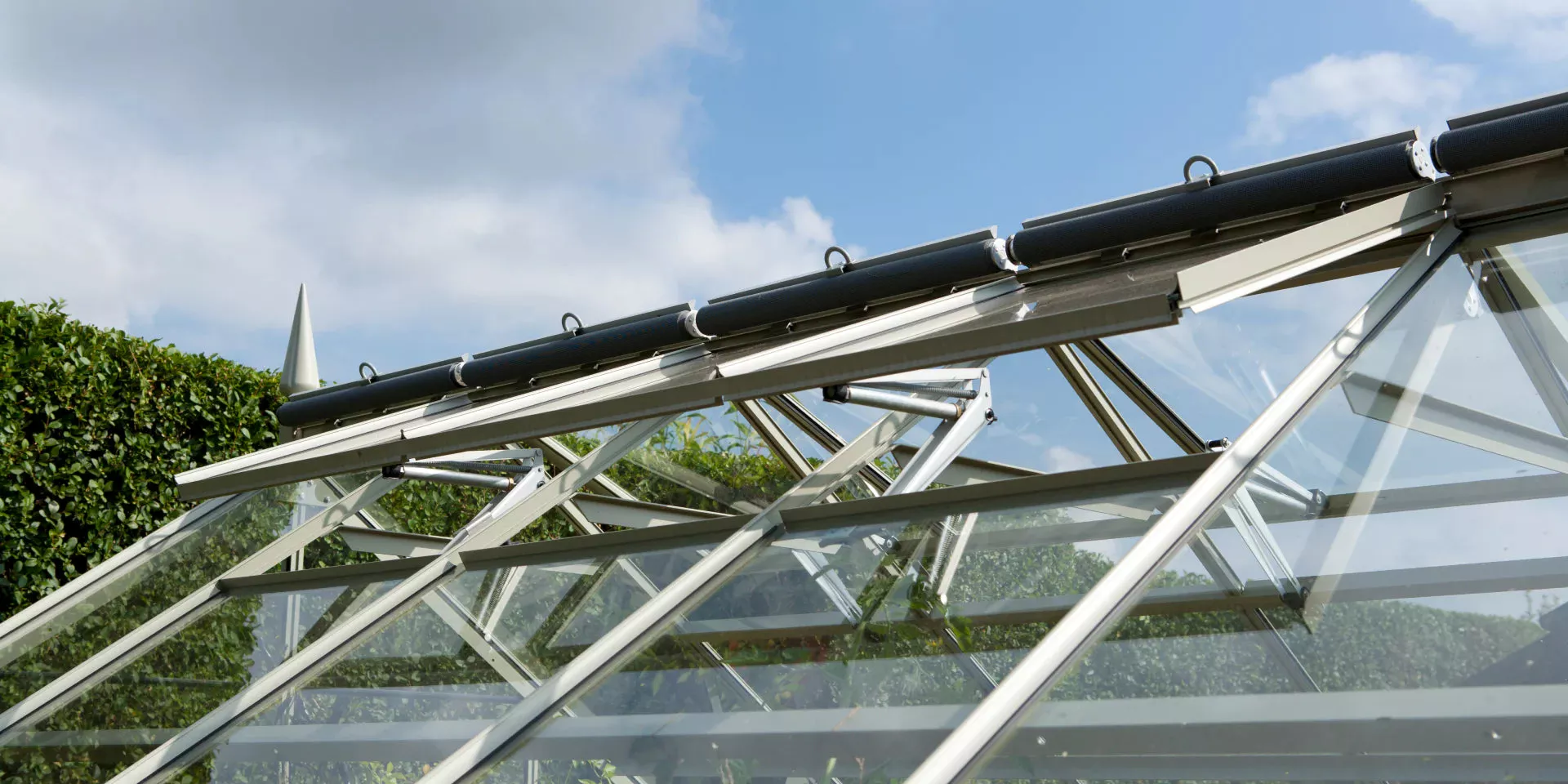
1. Precise Climate Control → Higher Crop Yields
The core advantage of a motorised ventilation gearbox is precision. A climate controller can open vents to exactly 35% at 24°C and increase to 80% by 28°C, maintaining the ideal growing range for each crop stage. Manual alternatives introduce lag time and human inconsistency. Studies from Wageningen University indicate that maintaining optimal temperature and humidity in commercial tomato greenhouses through automated vent control can increase marketable yield by 8–15% annually. For high-value crops, that improvement can represent tens of thousands of dollars per hectare per season.
2. Energy Cost Savings Through Thermal Screens
Gearbox-driven energy screens are the single most cost-effective energy investment in a heated greenhouse. By deploying an aluminised thermal curtain at night (managed by a shading curtain gearbox), growers reduce radiant heat loss through the glass by 35–50%. A 1-hectare Dutch tomato greenhouse spending €180,000 annually on gas heating can save €54,000–€90,000 per year through consistent energy screen use. The payback period for the gearbox and screen system is typically under 2 seasons.
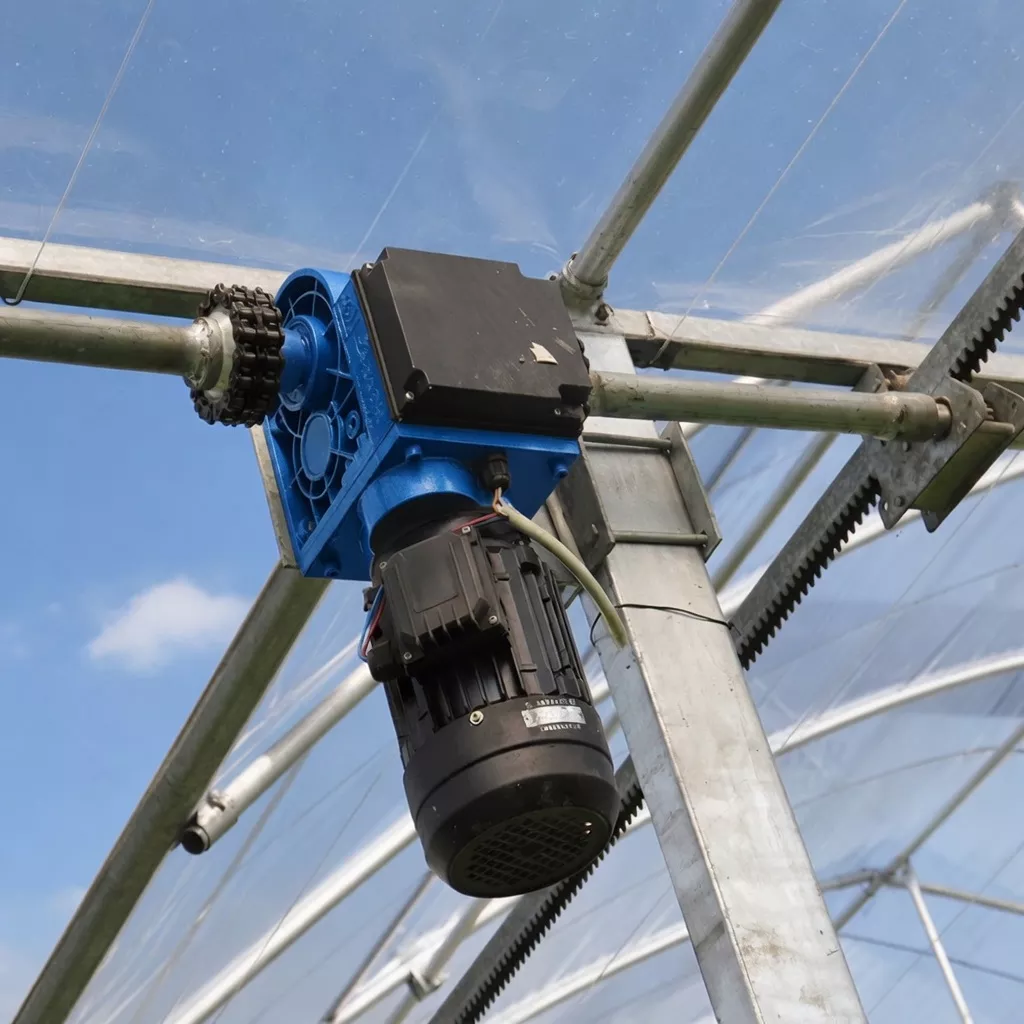
3. Reduced Labour Costs
Manual sidewall ventilation in large poly-film greenhouses requires staff to walk the entire perimeter multiple times per day — in tropical climates, this may mean 3–6 adjustments between sunrise and sunset. A motorised rolling film gearbox system connected to a basic temperature controller eliminates this labour entirely. For a 2-hectare facility with 400 metres of sidewall, automating the rolling film system with gearboxes and sensors can free 2–3 full-time worker-equivalent hours daily, translating to $15,000–$25,000 in annual savings depending on local labour rates.
4. Structural Protection Against Extreme Weather
Automated gearbox systems integrated with wind speed sensors can close rolling film sidewalls and roof vents within 60–90 seconds of a wind alarm trigger. Manual systems, by contrast, may take 15–30 minutes to respond — by which time film panels can tear, structural elements can be damaged, or crops exposed to cold winds can suffer chilling injury. The cost of a single storm damage event typically exceeds the investment in automated gearbox systems for an entire greenhouse section.
5. Long Service Life with Low Maintenance
Quality worm-type greenhouse gearboxes require no external lubrication access — they are sealed for life under normal intermittent operation. Compared to belt drives, chain drives, and cable-and-pulley systems that need frequent tension adjustment and replacement, a properly installed greenhouse gearbox can operate for 10–15 years with only periodic housing inspection. The low maintenance burden is especially valuable for operations in remote areas where service technicians are costly to mobilise.
6. Disease and Pest Prevention Through Humidity Control
Botrytis cinerea (grey mould) alone is responsible for an estimated 10–25% annual crop losses in poorly ventilated European glass greenhouses. A ventilation gearbox system that responds within seconds to humidity spikes above 85% RH prevents the condensation conditions that trigger Botrytis sporulation. By reducing fungicide applications through better ventilation management, growers lower chemical costs and gain premium pricing for residue-free produce. Explore our full range of automated greenhouse gearboxes designed to support integrated pest management programs.

7. Compatibility with Smart Farming Technology
Modern motorised greenhouse gearboxes accept signals from IoT climate sensors, weather stations, and AI-driven growing algorithms that optimise vent positions in real time based on solar radiation, wind direction, crop transpiration rates, and CO₂ levels. As vertical farming and precision horticulture become mainstream, gearboxes that integrate seamlessly with digital infrastructure provide a competitive edge. Our company supplies gearboxes validated for use with leading smart greenhouse platforms including Priva and Argus.
Advantages at a Glance
8–15% Higher Yield
Via precise automated climate management
35–50% Energy Saving
With motorised thermal energy screens
Less Labour
2–3 hours/day freed per 2-hectare facility
Storm Protection
60–90 second automated closure on wind alarm
10–15 Year Lifespan
Sealed, low-maintenance worm drive
Why Choose Our Greenhouse Gearboxes?
At Greenhouse Gearbox, we combine factory-direct manufacturing with specialised agronomic knowledge to deliver gearboxes that unlock every one of the advantages listed above. Our products are tested at full load under simulated greenhouse humidity conditions before shipment, and backed by responsive technical support from horticultural drive specialists — not generic mechanical engineers.
FAQ — Advantages of Greenhouse Gearboxes
How quickly does a greenhouse gearbox system pay for itself?
For heated greenhouses deploying thermal energy screens, payback is often 12–18 months. For rolling film automation in labour-intensive operations, payback ranges from 18–36 months depending on local wages. Ventilation automation for crop quality improvement shows softer ROI but compounds over multiple seasons through reduced disease losses and premium pricing.
Does gearbox automation eliminate the need for on-site staff?
No, but it allows the same workforce to focus on higher-value tasks — crop scouting, training, harvesting, and quality grading — rather than repetitive curtain and vent adjustment. Modern greenhouse gearbox systems with remote monitoring capability reduce emergency callouts by flagging slow or stuck drives before they cause crop damage.
Can I retrofit gearboxes to an existing manual greenhouse?
Yes. Retrofitting is one of the most common use cases. Existing manual roll bars, vent racks, and curtain drive tubes can typically be adapted to motorised gearboxes by fitting a compatible motor mount bracket and motor. The existing mechanical drive chain usually remains usable, significantly lowering retrofit costs compared to a complete system replacement.
Are there disadvantages or limitations to greenhouse gearboxes?
The main limitation is that worm gearboxes have lower mechanical efficiency (50–85%) compared to spur-gear systems (95–98%). This means the motor must be slightly oversized to compensate for heat losses in the gearbox. For intermittent greenhouse operation, this is a minor cost — a 0.1–0.37 kW motor runs for only a few minutes per cycle, making efficiency differences negligible in practice.
Do greenhouse gearboxes work with solar-powered greenhouses?
Yes. 24V DC versions of rolling film and ventilation gearboxes are specifically designed for off-grid and solar-powered greenhouse installations. Low-voltage DC motors consume 20–60W per gearbox, making them compatible with modest solar arrays and battery banks, even in remote farming communities with no grid connection.
How does gearbox quality affect crop insurance and finance?
Some specialist horticultural insurers offer reduced premiums for greenhouses with certified automated vent closure systems linked to wind speed alarms. Agricultural lenders and farm advisers increasingly consider automated climate control — enabled by gearboxes — as a risk-reduction factor when evaluating greenhouse investment financing applications.
Start Realising These Advantages Today
Speak with a greenhouse drive specialist to design an automation upgrade that pays back within your first season.
Book a Free Consultation
Browse All Gearboxes
Email: [email protected]