Common Uses of Greenhouse Gearboxes
A greenhouse gearbox is one of those components that quietly powers almost every critical climate-control function on a modern growing facility. From opening ridge vents during peak afternoon heat to deploying thermal energy screens before sunrise, gearboxes enable the precise, repeatable mechanical motion that keeps crops alive and profitable. This guide covers the most common application categories — ventilation, film rolling, shading, thermal screening, and beyond — with practical detail for growers evaluating which gearbox type suits their operation.
1. Roof and Ridge Vent Operation
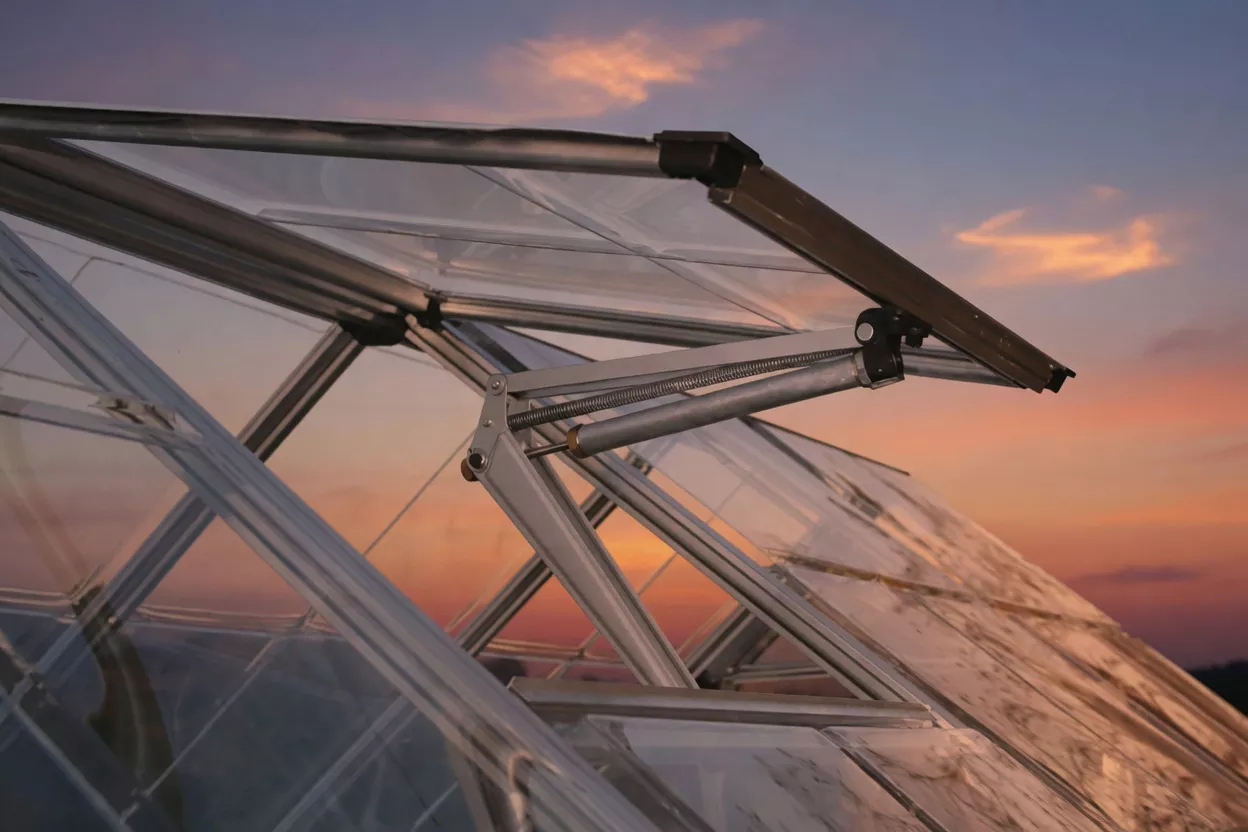
The most widespread use of a ventilation gearbox is driving the rack-and-pinion mechanisms that open and close roof ridge vents on glass, polycarbonate, or multiwall greenhouse structures. A typical Venlo-type glass greenhouse bay contains one gearbox driving a continuous rack spanning the full ridge length of a bay. As outside temperature rises, the climate controller commands the motor to advance the rack, pushing vent panels to a calculated opening percentage. Precise ventilation keeps internal temperatures within ±1–2°C of setpoint and flushes excess humidity before fungal disease thresholds are reached.
Sidewall louvre vents in polycarbonate greenhouses also rely on ventilation gearboxes, using push-rod linkages rather than racks. Gearboxes for this use typically deliver 40–80 Nm at output and cycle up to 15–20 times daily in warm climates.
2. Sidewall and End-Wall Rolling Film Systems
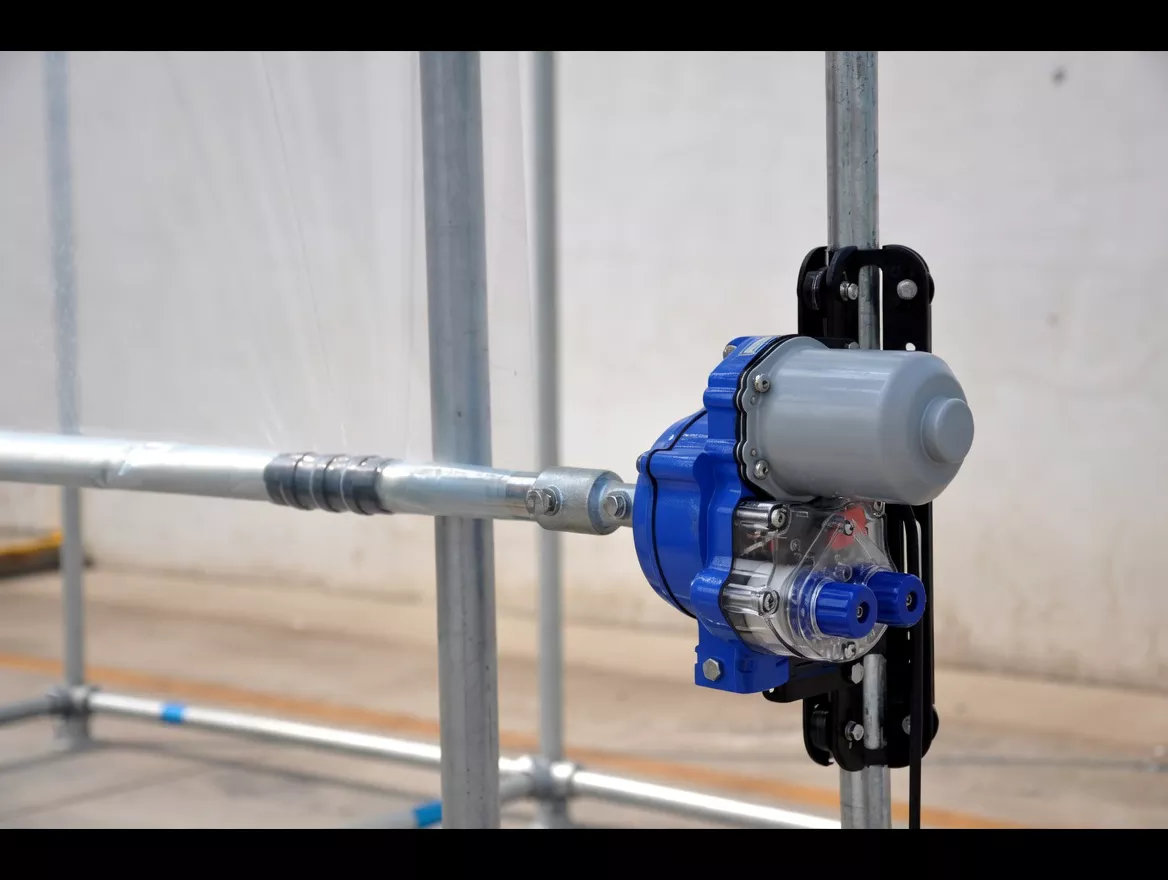
In tropical and subtropical climates, poly-film greenhouses and high tunnels rely on the rolling film gearbox as the primary ventilation mechanism. The gearbox mounts at the base of the sidewall and rotates a 1.315″ OD steel roll bar. As the bar turns, it winds the polyethylene film upward, opening the sidewall to natural airflow. A 4:1 gear ratio on a manual unit reduces the hand-crank effort to a comfortable level even on 50-metre sidewall runs. Motorised versions extend operation to 100+ metre spans and integrate with wind sensors that automatically close the film in high-wind conditions — a critical protection for single-skin poly greenhouses.
3. Internal Shading and Blackout Curtain Systems
Overhead shade systems require a shading curtain gearbox to translate the rotary output of a motor into the linear travel of a push-pull drive tube that moves the curtain along a wire-and-rail system. Aluminet shade cloths with 30–75% shading factor protect heat-sensitive crops (lettuce, herbs, young transplants) from solar radiation, reducing internal temperatures by 5–12°C compared to unshaded conditions. The gearbox output shaft connects via a universal joint or drive-tube clamp to the curtain rail, and the self-locking worm drive holds the cloth at any intermediate position without power consumption.
Blackout curtain systems — used for photoperiod control on cannabis, chrysanthemums, and poinsettias — demand even more reliable gearboxes because incomplete closure can render an entire light-sensitive crop cycle unmarketable. These systems often use higher-ratio gearboxes (40:1 to 80:1) with torque capacities up to 200 Nm to pull heavy double-layer blackout fabric smoothly and quickly.
4. Thermal Energy Screen Deployment
Energy screen systems in Dutch Venlo glasshouses use gearboxes to deploy aluminised thermal screens at night, reducing heating energy consumption by 30–50%. The gearbox operates continuously for 5–10 minutes at dusk (deploy) and dawn (retract), often linked directly to the central greenhouse climate computer. For energy screens, the drive systems must deliver consistent torque across the full travel distance to ensure the screen closes without gaps. Our gearbox product range includes models specifically torque-rated for continuous 200+ metre energy screen spans.
5. Irrigation and Fertigation Boom Systems
Travelling gantry irrigation booms use gearboxes to drive the wheels or rack-and-pinion propulsion system that moves the boom along the greenhouse bay at a controlled, even speed. Gearbox selection here prioritises smooth low-speed output (often less than 0.5 rpm on the drive wheel) and high positional accuracy. While not the primary application for ventilation or film gearboxes, many of the same compact worm-reduction units serve irrigation boom duty in smaller polytunnel operations.
6. Light Deprivation (LightDep) Systems
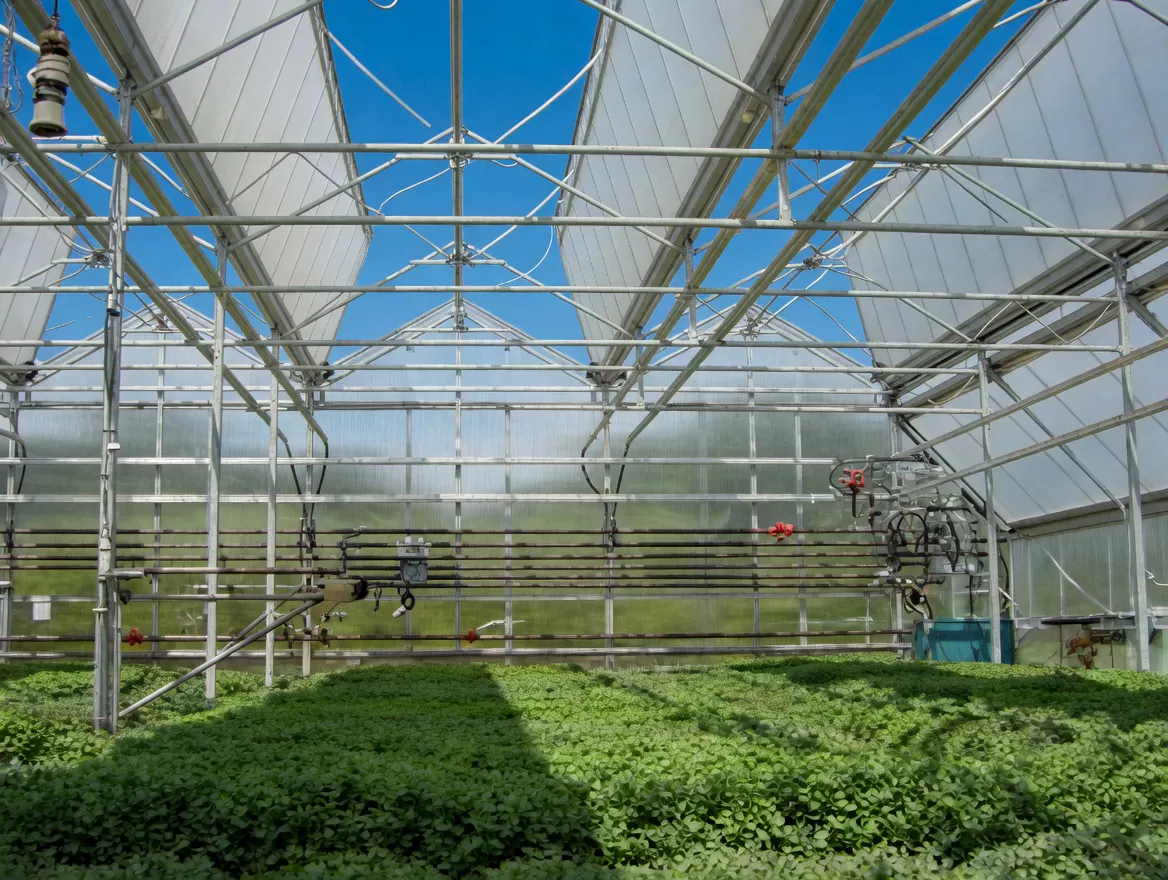
Light-deprivation greenhouses — increasingly popular in cannabis cultivation and specialty cut flower production — use motorised gearboxes to deploy opaque tarps over entire greenhouse bays within 1–3 minutes. The speed and torque requirements here exceed standard shading systems: a 6m × 30m bay section requires a gearbox delivering 100–150 Nm to reliably pull a heavy, water-resistant tarp against structural resistance. Automated LightDep systems are typically controlled by timers or light sensors, cycling twice daily with high mechanical stress on the drive components.
Use-Case Summary Table
| Application | Gearbox Type | Typical Torque | Ratio Range |
|---|---|---|---|
| Roof ridge vent | Ventilation gearbox | 40–100 Nm | 20:1–80:1 |
| Sidewall poly film | Rolling film gearbox | 60–100 Nm | 4:1–45:1 |
| Aluminet shade screen | Shading curtain gearbox | 60–120 Nm | 12:1–80:1 |
| Thermal energy screen | Shading curtain gearbox | 100–200 Nm | 40:1–80:1 |
| Blackout LightDep system | Shading curtain gearbox | 100–150 Nm | 40:1–80:1 |
| Irrigation boom drive | Ventilation gearbox | 20–60 Nm | 40:1–80:1 |
Why Choose Greenhouse Gearbox for Your Application?
Our team calculates the exact torque and gear ratio required for your greenhouse span, film weight, and climate zone before you purchase.
Our gearbox output shafts are compatible with standard greenhouse hardware from Ridder, Ammerlaan, and most Asian greenhouse system suppliers.
Greenhouse builders fitting 50–1000+ gearboxes per project receive dedicated pricing tiers and fast-track delivery to keep installation schedules on track.
FAQ — Common Uses of Greenhouse Gearboxes
Can the same gearbox be used for both ventilation and rolling film?
In some cases, yes — if the output shaft size and gear ratio match both applications. However, ventilation gearboxes are optimised for rack-and-pinion linear motion, while rolling film gearboxes are designed for continuous rotary output with built-in shaft supports for long roll bars. Using a dedicated model for each application delivers better durability and performance.
How many gearboxes does a typical greenhouse require?
A standard 1-hectare Venlo glass greenhouse may contain 40–100 ventilation gearboxes (one per 6.4m bay on each side), 20–40 shading curtain drive units, and potentially 20–60 rolling film or energy screen drives. Large-scale operations integrate hundreds of gearboxes, all networked to a central climate computer, making reliability and parts availability critical selection criteria.
Is a gearbox necessary for a small hobby greenhouse?
For greenhouses under 100 m², a simple manual gearbox with hand crank is often sufficient. The 4:1 gear reduction makes operating a 5–10 metre sidewall film roll effortless. Hobbyists often start with a manual rolling film gearbox and later retrofit a 24 V DC motor for automated operation as their growing ambitions expand.
What is the maximum sidewall span a rolling film gearbox can handle?
Manual rolling film gearboxes typically handle spans up to 100 metres effectively with a 4:1 ratio. Motorised versions using 45:1 or 80:1 ratios can cover 200+ metre continuous spans when gearboxes are spaced at 40–50 metre intervals along the roll bar, sharing the torque load. The gearbox specifications and motor power must be calculated against film weight, roll bar diameter, and span length.
Can greenhouse gearboxes work in cold climates?
Yes, but lubricant selection is critical. Standard ISO VG 220 gear oil thickens significantly below -10°C. For cold-climate applications (Canada, Scandinavia, Northern Europe), a synthetic low-viscosity oil (ISO VG 100 or PAO-based) maintains lubrication at -25°C and below, ensuring smooth gearbox startup on sub-zero mornings when thermal screen deployment is most critical.
Do greenhouse gearboxes work with automated climate control systems?
Absolutely. Motorised greenhouse gearboxes accept standard 230V AC or 24V DC inputs and can be controlled by any relay, contactor, or variable-frequency drive output. Integration with Priva, Argus, Ridder Drive, and open-source Raspberry Pi-based controllers is straightforward when the correct motor voltage and run-time parameters are configured in the climate computer.
Find the Right Gearbox for Your Greenhouse Application
Tell us your span, film type, and climate zone — we will specify the correct torque, ratio, and motor size within 24 hours.
Get a Free Specification
View Products
Email: [email protected]